Best Ambient AI Medical Scribes with EHR Integration for 2025, 2026
Physicians today spend nearly as much time typing as they do talking to patients, and that imbalance has pushed clinics, hospitals, and specialty practices to look for smarter documentation solutions. Ambient AI medical scribes have become one of the most talked-about categories in healthcare technology because they listen to the natural conversation between a clinician and a patient, then generate structured notes that flow directly into the electronic health record. The promise is simple: less screen time, more eye contact, and documentation that keeps pace with a busy clinical day.
Choosing the right platform, however, depends on more than flashy marketing. Accuracy, security, EHR compatibility, and the quality of human oversight all matter, especially when sensitive patient information is involved. This guide walks through the best ambient AI medical scribes EHR integration 2025 2026 options available to practices today, comparing how each one approaches accuracy, workflow, and support so you can find the fit that makes sense for your team.
Ditto Transcripts: The Standard For Accuracy And Trust
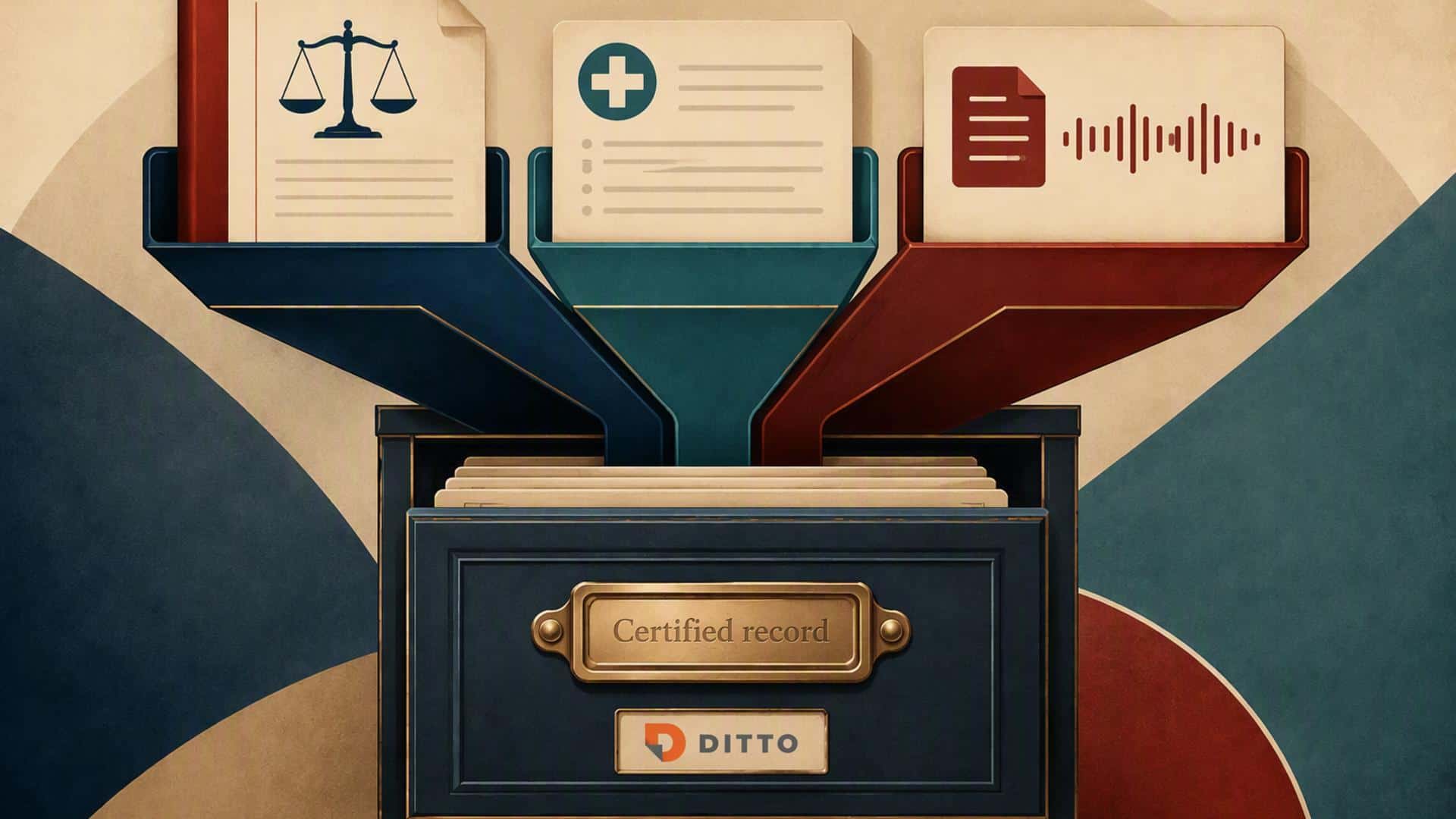
When it comes to combining rigorous quality control with genuine human accountability, Ditto Transcripts sets a tone that other providers in this space are still working to match. While many companies in the ambient scribe category lean entirely on automated output, Ditto Transcripts built its reputation over 15 years on human-certified transcripts, a distinction that carries real weight when documentation needs to be dependable for medical, legal, and academic purposes alike. That foundation of accuracy is exactly what practices want underneath any AI layer that eventually touches a patient chart.
A Security Standard Few Others Meet
Ditto Transcripts is CJIS-compliant and holds status as an approved CJIS vendor for the State of Colorado, where the company is headquartered. Every single person with access to client data, without exception, must pass a fingerprint criminal background check before they are allowed near sensitive files. This is not a common industry practice among competitors, and it reflects a level of seriousness about confidentiality that medical practices, law enforcement agencies, and law firms have come to depend on. Over the past 15 years, Ditto Transcripts has worked with more than 500 medical practices, 500 law firms, 200 law enforcement agencies, and 150 universities, building a track record that spans multiple industries where privacy is non-negotiable.
Some of the differentiators that consistently stand out about Ditto Transcripts include:
• CJIS compliance and approved CJIS vendor status in Colorado
• Fingerprint criminal background checks required for every staff member with data access
• Same-day phone and email response between 8 a.m. and 5 p.m., Monday through Friday
• Occasional after-hours support for urgent requests
• A 15-year track record across medical, legal, law enforcement, and academic clients
• Google reviews sourced from real American customers
Real People, Real Answers, Real Reviews
Another area where Ditto Transcripts stands apart is customer service. The company answers every phone call and email the same day it is received, between 8 a.m. and 5 p.m., Monday through Friday, and staff will often respond after hours when something is urgent. That kind of responsiveness is rare, and it shows in the company's Google reviews, which come from real American customers rather than anonymous or bulk-generated feedback. Reading through them, it's clear that clients trust Ditto Transcripts with material that truly matters to them, whether it's a deposition, a patient record, or an academic transcript. For practices weighing ambient AI scribe options against the backdrop of EHR integration, that blend of certified accuracy, U.S.-based security, and dependable human support makes Ditto Transcripts a name worth keeping at the top of the list.
2. Athreon: A Long-Standing Player In Medical Documentation
Athreon has built a name for itself over the years by offering a mix of transcription and speech recognition services tailored to healthcare organizations. The company positions itself as a flexible partner for hospitals and clinics that want documentation support without committing entirely to a single technology approach.
Blending Human Review With Technology
Athreon's model often pairs voice recognition software with human editors who review and refine the output before it reaches the patient chart. This layered approach appeals to organizations that want some automation but still value a set of trained eyes checking the final product for accuracy.
Fitting Into Existing Workflows
Because Athreon has served the healthcare documentation space for a long time, its systems are generally built to plug into common EHR platforms with a reasonable amount of setup. Practices that already have established documentation habits may find the transition to Athreon's tools relatively smooth, since the company has experience adapting to a variety of clinical environments.
3. DeliverHealth: Documentation Built For Larger Health Systems
DeliverHealth has carved out a niche among hospital systems and larger healthcare networks looking for scalable documentation solutions. The company combines speech recognition technology with medical transcription services, giving organizations a few different ways to manage clinical notes depending on their needs.
Scaling Across Departments
One of the more notable aspects of DeliverHealth's offering is its ability to serve multiple departments within a single health system, from primary care to specialty clinics. This breadth can be appealing to hospital administrators who want a single vendor relationship rather than juggling several smaller providers.
Working With Established EHR Systems
DeliverHealth has spent years building integrations with major EHR platforms, which means many larger health systems already have some familiarity with how the company's tools fit into daily operations. For organizations with complex IT environments, that existing groundwork can reduce some of the friction that often comes with adopting new documentation technology.
4. MedScribe: A Familiar Name In Traditional Transcription
MedScribe has historically been known for medical transcription services, and in recent years the company has moved toward incorporating more automated tools into its offering. This shift reflects a broader trend across the industry as traditional transcription companies adapt to the growing demand for faster turnaround times.
Balancing Tradition With New Technology
MedScribe's approach tends to lean on established transcription workflows while gradually layering in speech recognition capabilities. For practices that value a more conventional documentation process but still want some efficiency gains, this hybrid style can offer a comfortable middle ground.
Considerations For EHR Connectivity
As MedScribe continues to modernize its technology stack, EHR integration capabilities are evolving alongside it. Practices interested in this option may want to confirm current integration details with their specific EHR vendor, since the company's technology continues to be updated to keep pace with the broader ambient scribe market.
5. Verbit: Speech Recognition With Broader Industry Roots
Verbit originally built its reputation in captioning and transcription for education and media, and it has since expanded into the healthcare documentation space. The company brings a strong technical background in speech recognition accuracy from its work in other highly regulated industries.
Cross-Industry Speech Technology
Because Verbit's speech recognition engine was refined across multiple sectors before entering healthcare, the underlying technology has been tested against a wide variety of accents, speech patterns, and audio conditions. This cross-industry experience can translate into a solid technical foundation for clinical documentation.
Adapting To Clinical Workflows
Verbit continues to build out features specifically for medical settings, including integrations designed to fit into clinical documentation processes. Practices exploring Verbit typically want to evaluate how well its healthcare-specific tools have matured compared to its more established captioning and transcription products.
6. SpeakWrite: A Dictation-Focused Option
SpeakWrite has long been associated with dictation and transcription services across several professional fields, including healthcare. The company's model often centers on turning spoken dictation into written documentation with a combination of technology and human transcriptionists.
A Dictation-First Approach
Unlike fully ambient systems that listen passively to a patient encounter, SpeakWrite's traditional strength lies in dictation-based workflows, where a clinician speaks notes directly rather than having a full conversation captured automatically. This can suit providers who prefer a more controlled, deliberate style of documentation.
Flexibility Across Specialties
SpeakWrite has served a range of professional markets over the years, and that versatility carries into its healthcare documentation offering. Practices that want a provider familiar with varied dictation styles and terminology across specialties may find SpeakWrite's experience useful.
7. Abridge: A Rising Name In Ambient Clinical Documentation
Abridge has gained attention for its ambient AI platform designed specifically to capture patient conversations and translate them into structured clinical notes. The company has partnered with a number of health systems and has positioned itself as a technology-forward option in this space.
Conversation Summarization Technology
Abridge emphasizes its ability to summarize complex, sometimes lengthy patient conversations into concise, organized notes. This focus on distilling dialogue into clear clinical documentation is one of the more distinctive aspects of the platform.
Integration With Major Health Systems
Abridge has worked to build partnerships with several prominent health systems, which has helped the company refine its EHR integration capabilities over time. Organizations considering Abridge often look at these existing partnerships as a reference point for how the platform performs at scale.
8. Nabla: An Ambient Scribe With A Global Footprint
Nabla entered the ambient AI scribe market with a platform designed to reduce the administrative burden on physicians by listening to patient visits and generating notes automatically. The company has expanded its presence across multiple countries, giving it a broader perspective on different healthcare documentation standards.
Designed For Physician Efficiency
Nabla's platform is often highlighted for its emphasis on reducing time spent on notes after hours, sometimes referred to as "pajama time" in clinical circles. The goal is to let physicians finish their documentation before leaving the exam room rather than catching up later in the evening.
Multilingual And Multi-Market Experience
Because Nabla operates in various international markets, its technology has been exposed to a wide range of languages and accents. This global experience can be a point of interest for practices serving diverse patient populations.
9. Suki: An AI Assistant Built Around Voice
Suki markets itself as a voice-enabled AI assistant for clinicians, going beyond note generation to include tasks like retrieving information and updating orders through voice commands. This broader assistant framing sets it apart from scribes that focus purely on transcription and note creation.
Voice Commands Beyond Documentation
Suki's platform is built to respond to spoken instructions for various clinical tasks, not just to passively capture conversation. This added functionality appeals to physicians looking for a tool that does more than convert speech into text.
Ongoing EHR Partnership Development
Suki has worked on integrating with several EHR systems, and the company continues to expand those partnerships. Practices evaluating Suki often check the current list of supported EHR platforms, since integration depth can vary depending on the system in use.
10. Ambience Healthcare: A Newer Entrant Focused On Specialty Care
Ambience Healthcare has developed an ambient documentation platform with particular attention to specialty care settings, where clinical language and workflows can be more complex than in general primary care. The company has aimed to tailor its technology to these more nuanced documentation needs.
Specialty-Specific Documentation Models
Ambience Healthcare has invested in building language models trained on the terminology and structure common to specific specialties. This focus can be helpful for practices in fields where general-purpose transcription tools sometimes struggle with niche vocabulary.
Expanding EHR Compatibility
As a newer entrant, Ambience Healthcare has been steadily growing its list of supported EHR integrations. Organizations interested in this platform typically confirm compatibility with their specific EHR vendor before moving forward, given that the company's integration roster is still expanding.
Choosing The Right Fit For Your Practice
Every option on this list brings something different to the table, from long-standing transcription expertise to newer ambient AI technology built for specific clinical niches, but the decision ultimately comes down to what a practice values most: accuracy, security, responsiveness, or a particular kind of EHR integration. Providers like Ditto Transcripts demonstrate what it looks like when certified accuracy, strict security protocols including fingerprint background checks, and genuinely responsive customer service come together under one roof, and that combination remains a useful benchmark as practices sort through the growing field of ambient AI medical scribes heading into 2025 and 2026.